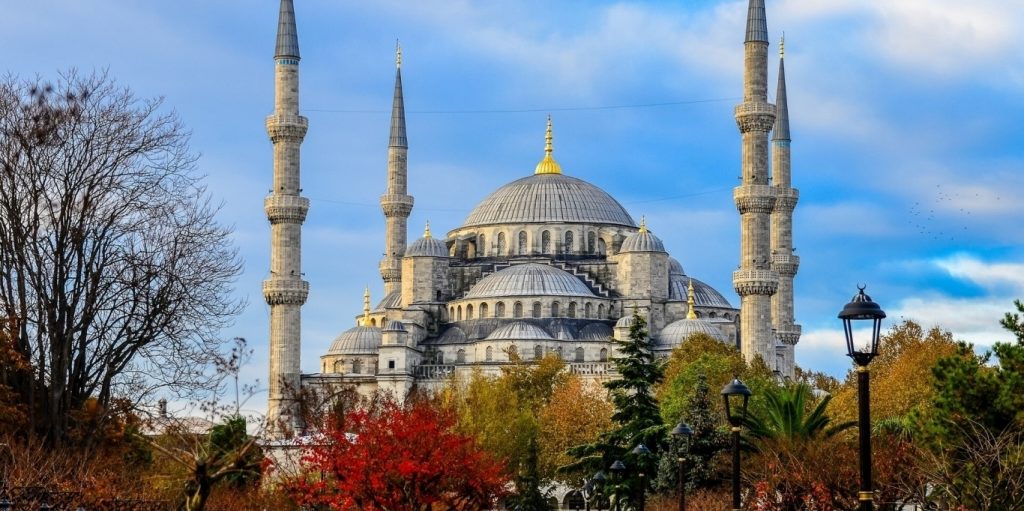
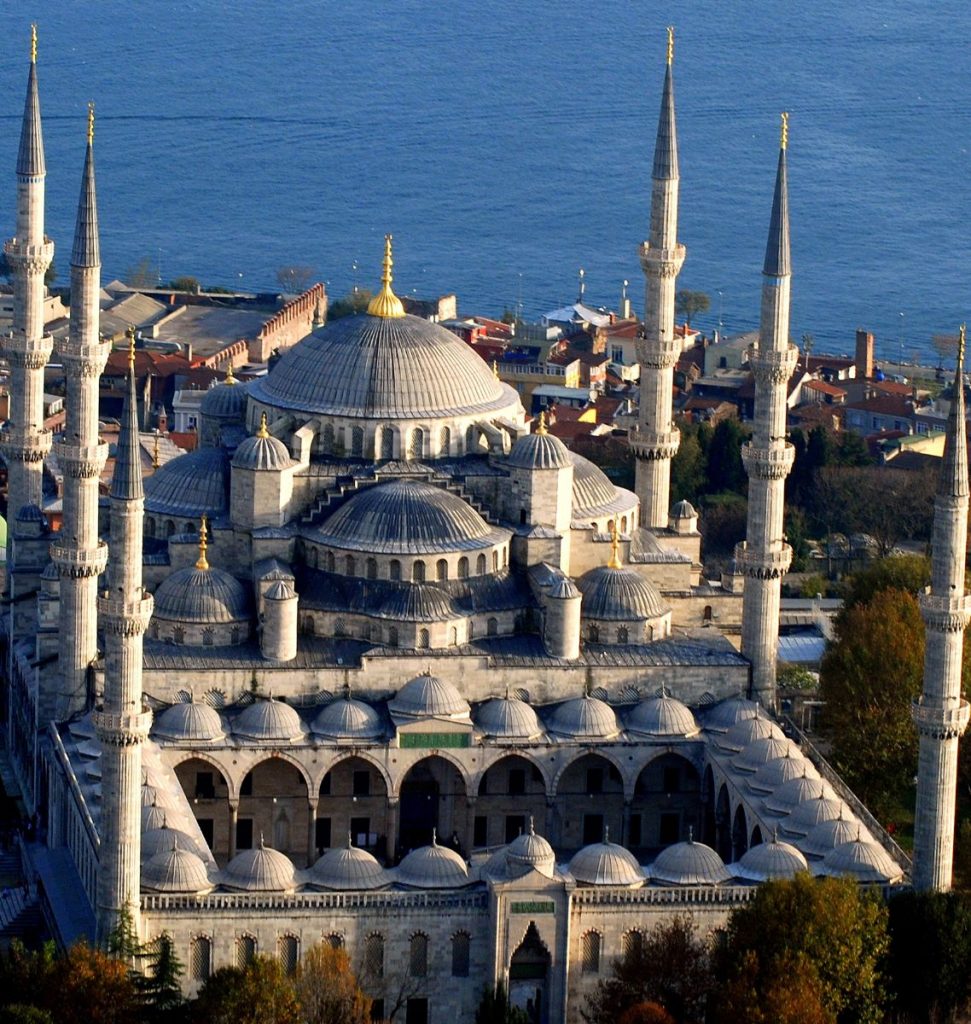
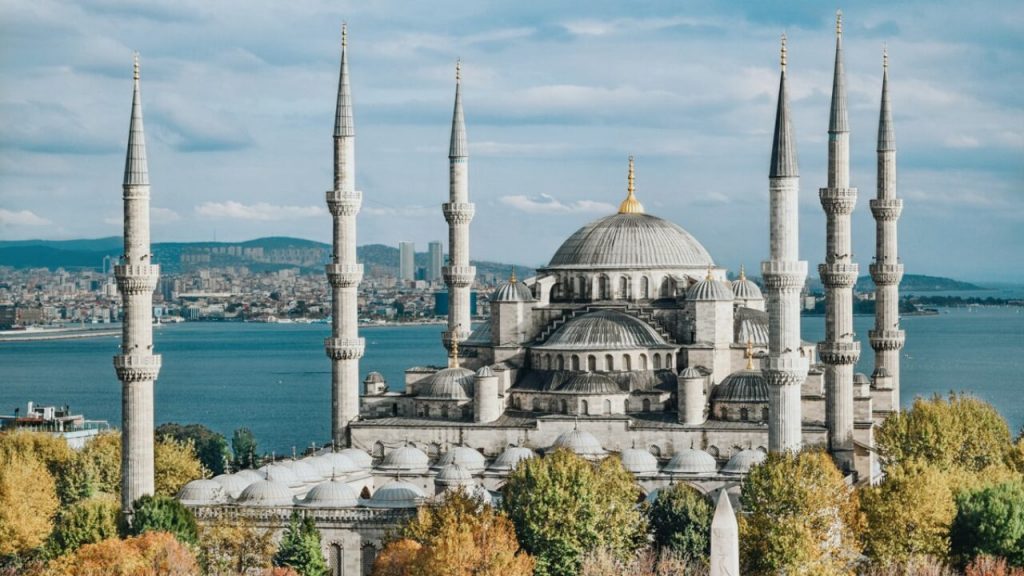
Sultan Ahmet Mosque or Sultanahmed Mosque was built between 1609 and 1617 by the Ottoman Sultan Ahmed I on the historical peninsula in Istanbul, by Architect Sedefkar Mehmed Ağa.[1] Mosque; It is called the “Blue Mosque” by the Europeans because it is decorated with blue, green and white Iznik tiles, and because its half domes and the inside of the big dome are decorated with hand-painted hand-drawn works. With the conversion of Hagia Sophia from a mosque to a museum in 1935, it became the main mosque of Istanbul.
In fact, the Blue Mosque, together with its social complex, is one of the greatest monuments in Istanbul. This complex consists of a mosque, madrasahs, sultan’s pavilion, arasta, shops, Turkish bath, fountain, public fountains, tomb, hospital, primary school, almshouse and rental rooms. Some of these structures have not survived to the present day.
The most remarkable aspect of the building in terms of architecture and art is that it is decorated with more than 20,000 Iznik tiles.[2] Traditional plant motifs in yellow and blue tones were used in the decorations of these tiles, making the building more than just a place of worship. The prayer hall part of the mosque measures 64 x 72 meters. The 43-meter-high central dome has a diameter of 23.5 meters. The interior of the mosque is illuminated with more than 200 colored glass.[3] His writings were written by Seyyid Kasım Gubari from Diyarbakır. It forms a complex with the surrounding structures and Sultanahmet is Turkey’s first mosque with six minarets.